Request intake
Capture issue, customer context, urgency and preferred response channel.
AI customer support workflows · Canada
Salient AI helps customer support teams resolve existing customer issues using approved guidance, useful case context and a clear route to the responsible staff member.
Start with one useful resultDiscuss Support Workflows↗
The opportunity
Customer support automation starts with an existing customer’s issue. We design intake, categorization, approved answers, response preparation and escalation around resolving that issue. Sales qualification and prospect follow-up have separate goals; support staff need the service history and a useful next step. See how Salient AI consulting connects this service to leadership, adoption and a measurable business case.
What Salient AI builds
Every component makes the work, exception and accountable person easier to see.
Capture issue, customer context, urgency and preferred response channel.
Categorize the request and assign it using clear ownership and escalation rules.
Find relevant approved information with visible source references.
Pass the question, relevant permitted history, attempted steps and reason for escalation. Define ownership when a queue is unavailable or no rule fits.
Transfer the conversation and captured context without making the customer start again.
Review reopened requests, incorrect answers and staff corrections alongside response time. Assign an owner to update the underlying knowledge base.

Connect the inputs, routine actions, exceptions and human checkpoints.
From process to practice
Customer service automation should retain the issue, what has already been tried and the current owner. Use a maintained knowledge base for approved guidance, then pass a useful summary when a person takes over. Closing a ticket or avoiding a staff reply is not enough evidence of resolution. Check whether the customer got a useful answer and whether the same issue returned.
Start small
Choose one recurring support request with an approved answer. Test a known question, a missing answer, a dissatisfied customer and a reopened issue. Review handoff completeness and confirmed resolution before widening the assistant’s response scope.
A focused first engagementPlan the first step↗
Measure one recognizable improvement, learn from exceptions and expand responsibly.
What should improve
Frequently asked
Yes. The escalation path should be visible and appropriate to urgency, sensitivity and customer need.
For defined low-risk questions it may, using approved information and clear boundaries. Other responses should be prepared for review.
Often, yes. We map ticket fields, ownership, status and integration capabilities first.
Agree on measures such as time to a useful response, successful resolution, reopened requests and handoff quality. Fewer staff touches are useful only when the customer still receives an accurate answer.
Assign owners to the approved knowledge sources and define a review process for policy or service changes. Use unanswered questions and escalations to identify missing or outdated guidance.
Enough permitted context to continue: the issue, relevant answers, attempted steps and why the conversation needs a person. Avoid making customers repeat details already captured, and make responsibility for the next response clear.
Not on its own. Check successful resolution, reopened issues, incorrect answers and the quality of escalations. A smaller queue is not an improvement if customers cannot get help.
Related resources
Support Workflows in practice
These stories show how Salient AI begins with the actual workflow, the friction and the accountable people—not a generic automation package.
Explore all client work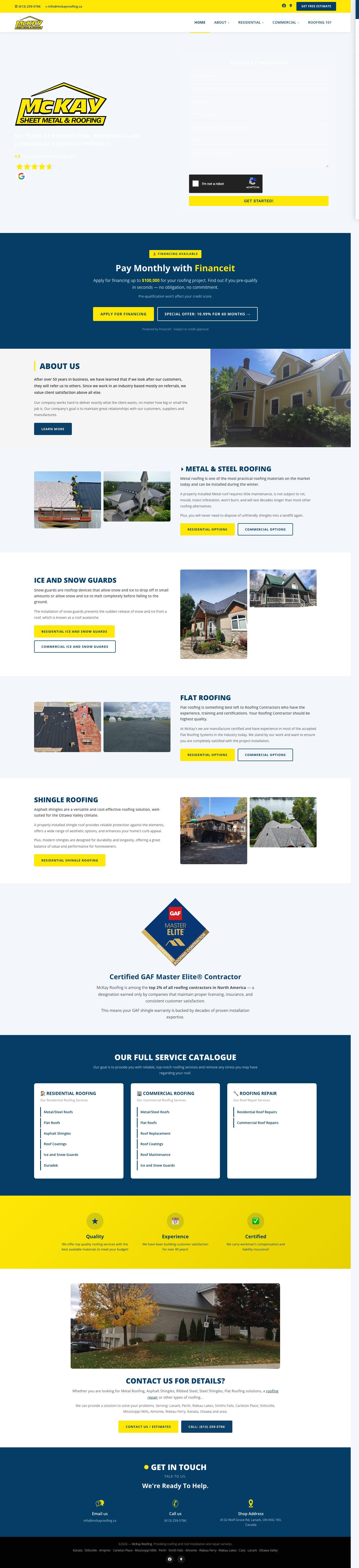
 McKay Roofing
Search visibility that earns bids, followed by a one-day prototype and an integrated operations-platform rebuild.
Read the client story ↗
 Base Bins
Marketing, ordering, payments and an AI receptionist connected around winning and closing local bin-rental leads.
Read the client story ↗
 BluSky Dental
A multilingual AI-built website, search program and AI receptionist designed around the complete lead path.
Read the client story ↗One useful beginning
Bring us one recurring administrative bottleneck. We will map a focused first result, the exceptions and the controls needed to make it useful.
A practical first stepTalk with Salient AI↗