Readiness and a decision brief
A defined use case, the people and information involved, known constraints and a recommendation to proceed, prepare or stop. Set priorities around business value and feasibility.
AI consultant · Strategy · Implementation · Adoption
Salient AI helps Canadian businesses assess AI readiness, choose a useful first project and carry it through implementation and adoption. We work across marketing, sales and administration, with clear measures and people responsible for the result.
Ottawa-based · Serving businesses, organizations, associations and charities across Canada

The consultant’s role
Choose the work worth improving before choosing the technology.
We review the current process, the information it uses, the systems involved and the people who will own the change. An AI readiness assessment should identify what can be tested now, what needs preparation and where a simpler process or conventional automation may be a better fit.
For a practical example of that decision, read The MacGyver Moment: should you buy, configure, connect or build?
What the engagement produces
Agree on the scope before work begins. A focused review, a pilot and a wider implementation need different levels of detail; not every engagement includes all three.
A defined use case, the people and information involved, known constraints and a recommendation to proceed, prepare or stop. Set priorities around business value and feasibility.
A workflow or prototype direction, the integrations it needs and a baseline to test against. Agree on representative examples, human review and the conditions for wider use.
Identify who approves changes, who uses the system and how exceptions reach a person. Define training, measurement and the next review before expanding the work.
The first decision
A credible AI consultant should be able to recommend all three. The answer depends on the value, information, risk and people involved.
The workflow is understood, the required information is available and a contained version can prove whether the result is real.
Clarify the process, organize the information, assign ownership or resolve a privacy and governance question before building.
Keep the work human when automation adds risk, removes a meaningful relationship or costs more than the friction it claims to solve.

AI has to flow from the top
Leadership does not need to become technical. It does need to understand what AI can change, model responsible use and explain why the organization is making the change.
Start personally. Speak to AI instead of laboriously typing every instruction. Use it to prepare for a meeting, examine a difficult email or organize a document. These small wins change belief because the leader experiences the capability—not because someone presented another slide deck.
Do one useful thing yourself. Then help the organization learn from it.
One organization · Three business divisions
A marketing problem may reveal a sales delay. A sales improvement may expose an administrative bottleneck. We begin where the pressure is clearest and keep the larger customer and employee journey visible.
 01
Help the right audience find, understand and choose you across search, AI answers, websites, advertising and content.
Explore marketing consulting ↗ 02
Respond while interest is active, qualify consistently and help people follow through with better context.
Explore sales consulting ↗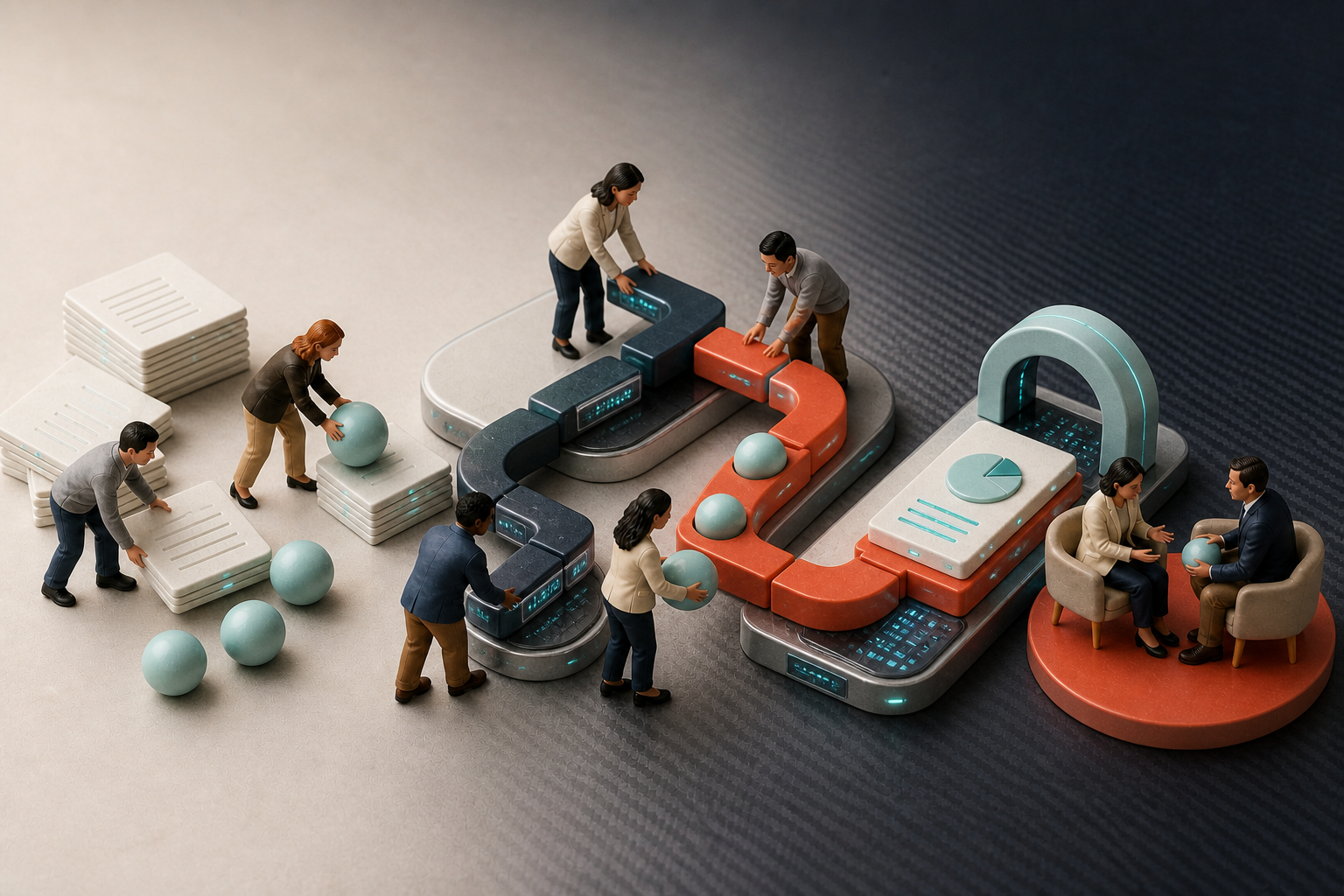 03
Reduce repeated work, improve knowledge access and connect the workflows that keep the organization moving.
Explore administration consulting ↗Adoption is organizational change
Employees need to understand the purpose of the change, what requires review and where to raise an exception. Data governance means agreeing which information may be used, who can access it and who approves a change. Salient AI can bring change-management, training and implementation support into the engagement. Read our approach to responsible AI and human oversight.
Meet the Salient AI teamA leader owns the business reason and models the behaviour.
The people doing the work help reveal exceptions and shape the practical system.
Human review, approved information, privacy and escalation paths are designed into the work.
We track whether people use it, whether the workflow improves and whether value appears.
Capacity and return
Set a baseline for the chosen workflow: time spent, response speed, errors, missed inquiries or output quality. Include software costs, implementation effort and the time people spend checking results when judging whether a pilot is worthwhile. Our guide to why the $20 AI plan is not the same as integration explains the difference between tool access and a working business system.
AI may change how a role spends its time. Leadership remains responsible for those decisions. Review user feedback and actual performance before expanding; a promising demonstration does not by itself establish a return on investment.
How AI consulting works
Bring one process, a person who knows the work and examples you are permitted to share. Use the cycle below to make the next decision with evidence. The scope and pace depend on readiness, access and review needs.
Map who does the work, what triggers it and where delays or exceptions occur.
Identify approved information, access limits and the systems a pilot would need to use.
Compare expected value, feasibility and human consequences; select one contained test.
Record current performance and agree on quality, cost and review criteria before building.
Test a workflow or prototype with representative examples, including exceptions and human review.
For one marketing example, explore a social media workflow you can test one example at a time.
Assign owners, explain boundaries and prepare users, training and escalation routes.
Compare results with the baseline, including errors, user feedback and the effort of operating the system.
Improve, expand, pause or stop. Record why the evidence supports the decision.
Consulting that reaches the real business
These engagements connect marketing, customer response and operations. Each expanded because the next useful business problem became visible.
Explore all client work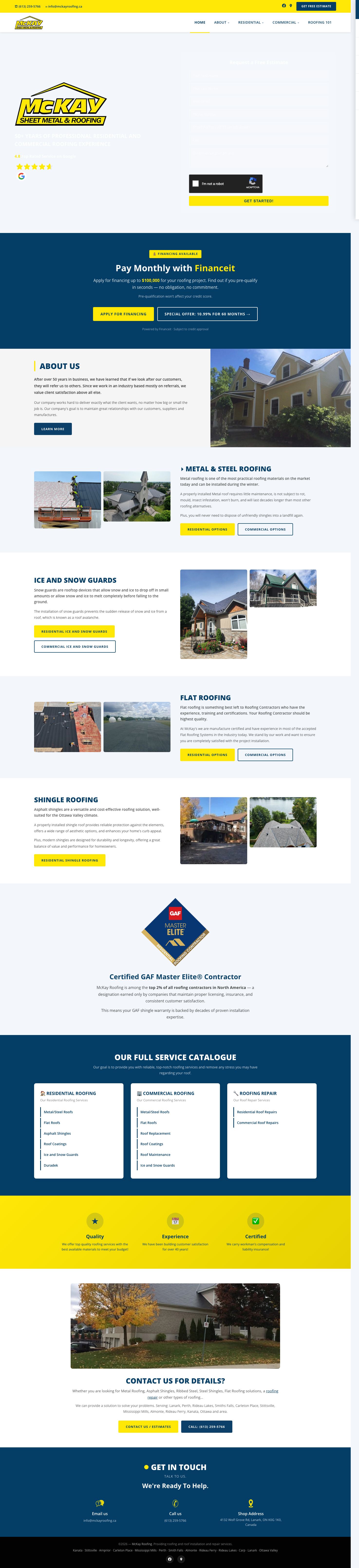
 McKay Roofing
Search visibility that earns bids, followed by a one-day prototype and an integrated operations-platform rebuild.
Read the client story ↗
 Base Bins
Marketing, ordering, payments and an AI receptionist connected around winning and closing local bin-rental leads.
Read the client story ↗
 BluSky Dental
A multilingual AI-built website, search program and AI receptionist designed around the complete lead path.
Read the client story ↗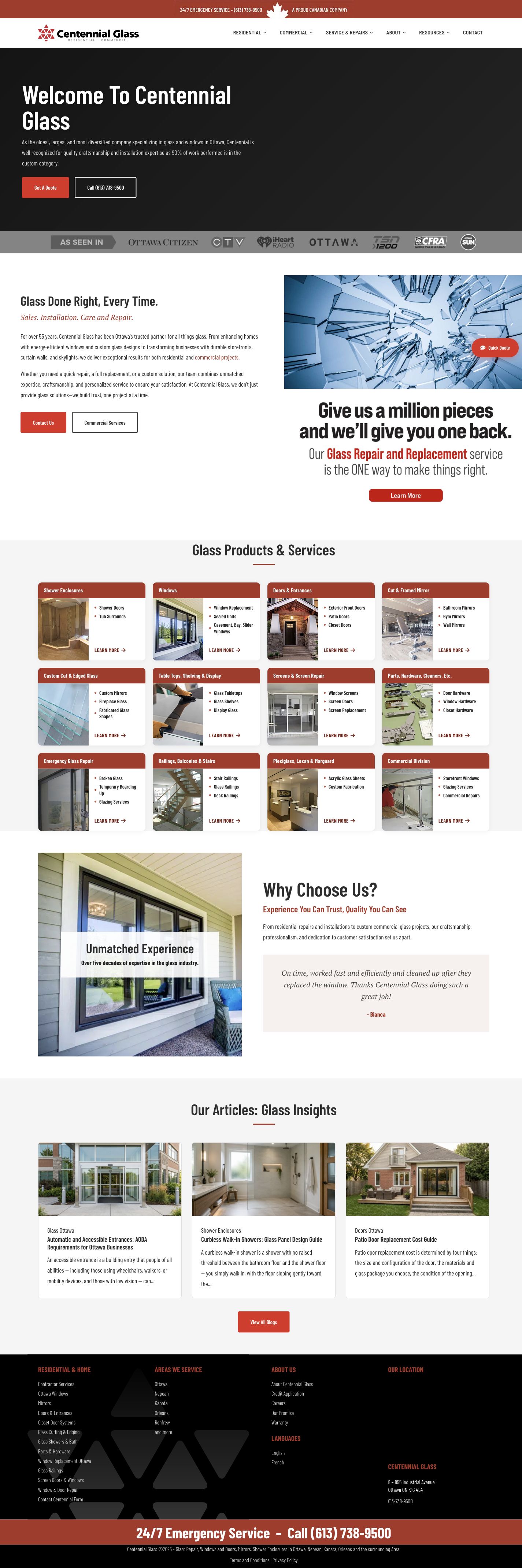
 Centennial Glass
A decade-long visibility system spanning web, search, content, advertising and local growth.
Read the client story ↗AI consulting across Canada
Salient AI is headquartered in Ottawa and serves organizations across Canada. Our city pages explain locally relevant industries and first-use cases without pretending we have offices where we do not.
AI consulting questions
An AI consultant helps leadership identify where AI could create a worthwhile business result, decide what should and should not be automated, build a practical first system and support the people responsible for adopting it.
Begin with one recurring point of friction that already costs time, customers, capacity or money. A small, measurable first use case creates the confidence and evidence needed for the next decision.
Sustained adoption needs visible leadership. The owner, president or CEO does not need to become a technical expert, but should understand the capability, model responsible use and make the business reason clear.
Yes. A working system is only part of the assignment. We can involve change-management, training and implementation specialists to help employees understand the purpose, boundaries and new way of working.
Cost depends on the process being reviewed, data preparation, integrations, testing, training and ongoing support. Agree on the deliverables and review points before committing to a larger implementation. A focused Opportunity Session can help establish what a next phase would require.
Yes. Start with one recurring task or customer problem that has enough value to justify attention. A small business may benefit from a focused workflow improvement without needing an organization-wide AI programme or a custom model.
Bring a description of the process, the systems involved, a person who understands the work and examples you are permitted to share. Begin with redacted or non-sensitive examples where possible, and agree on access and information boundaries before connecting business systems.
No. AI can do many things, but that does not make every use worthwhile. Sometimes the right recommendation is to improve the process first, keep human judgement in place or not automate the task at all.
A useful first decision
We will help you decide whether AI belongs there, what the smallest useful version should prove and what your people need to make it work.
A practical first stepTalk to an AI consultant↗