Technical knowledge is hard to retrieve
Operators and commercial teams may depend on a few experienced people for answers.
AI for manufacturing · Canada
Salient AI helps manufacturing teams locate current approved procedures, prepare operating summaries and route unanswered process questions to the responsible supervisor without changing machine controls.
Start with your workflowDiscuss AI for manufacturing↗
The industry reality
Manufacturers manage product specifications, customer requirements, quality records, maintenance and changing schedules. AI can make approved knowledge easier to use and recurring signals easier to interpret without bypassing operational controls.
Where pressure builds
These patterns shape where a focused AI use case can create practical value first.
Operators and commercial teams may depend on a few experienced people for answers.
Quality, downtime and schedule changes generate information that takes time to organize.
Accurate answers may cross sales, engineering, production and logistics.
Inside the work
Technology earns its place when it makes real work clearer, calmer and more useful for the people doing it.

Operators and commercial teams may depend on a few experienced people for answers.

Quality, downtime and schedule changes generate information that takes time to organize.
What we can build
Marketing, sales and operations opportunities are designed as one customer and team experience.
Help buyers find the plant’s documented processes, materials and production capabilities without inventing capacity or quality certifications.
Capture specifications, volumes, timing and certification needs before technical review.
Retrieve approved procedures, specifications and troubleshooting guidance by role.
Organize recorded observations, part references and document revisions for the quality team’s review; do not treat a summary as product acceptance.
Improve access to approved manuals, histories and escalation procedures.
Prepare consistent summaries from validated production and service inputs.
From possibility to practice

Help buyers find the plant’s documented processes, materials and production capabilities without inventing capacity or quality certifications.

Organize recorded observations, part references and document revisions for the quality team’s review; do not treat a summary as product acceptance.
A sensible first use case
Pilot information retrieval for one manufacturing work area. Index only approved procedures with their revision, equipment context and owner. Ask real staff questions, including one about a superseded instruction and one the source does not answer. Verify the retrieved procedure before assessing the generated explanation. Keep equipment operation and technical approval with the responsible team.
One focused implementationMap this opportunity↗Client work in manufacturing
These are genuine client examples selected because the market, workflow or customer journey connects directly to this sector.
Explore all client work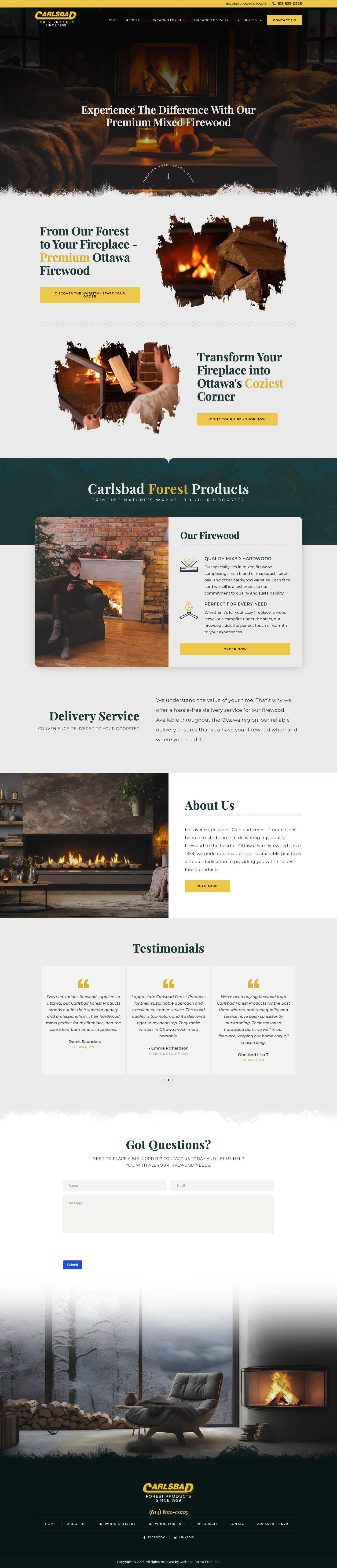
 Carlsbad Forest Products
A focused firewood website and ongoing organic program supporting consistent seasonal sell-through.
Read the client story ↗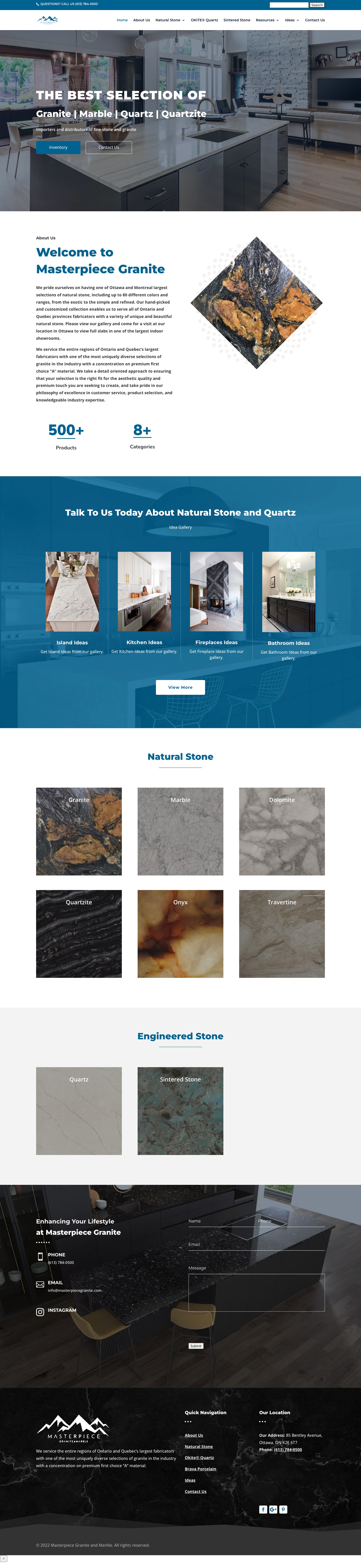
 Masterpiece Granite
A searchable live-stone inventory serving local fabricators while extending unique product visibility across Canada.
Read the client story ↗Keep the right things human
✓Approved and version-controlled sources
✓Operators and engineers retain decision authority
✓No bypass of quality or safety controls
✓Role-appropriate system and plant access
Questions worth asking
Possibly. We begin with a narrow workflow and assess the available interfaces, data quality and operational risk before connecting anything.
Predictive maintenance requires appropriate historical data and engineering validation. Many teams should begin with knowledge retrieval and maintenance coordination.
Use controlled sources, visible versions, named owners and a conservative response when the approved answer is uncertain.
Show the source, revision and owner with the answer, and check these against the controlled source. Withdraw superseded material and test common questions after each change; a confident answer is not evidence that the instruction is current.
No. A first pilot can use an approved read-only source set and a supervisor handoff. Any later connection to production systems requires a separate operational assessment; document retrieval alone does not justify control access.
Related resources
Your context first
We’ll help identify a practical first use case, the boundaries that matter and what a useful result should prove.
Ottawa-based · Canada-wideSchedule an AI opportunity session↗