Conditions change the plan
Weather, crop, input and labour realities can shift priorities quickly.
AI for agriculture + food production · Canada
Salient AI helps growers and food producers prepare source-linked production and shipment summaries, making missing lot information and conflicting records visible to the people responsible for operations.
Start with your workflowDiscuss AI for agriculture & food production↗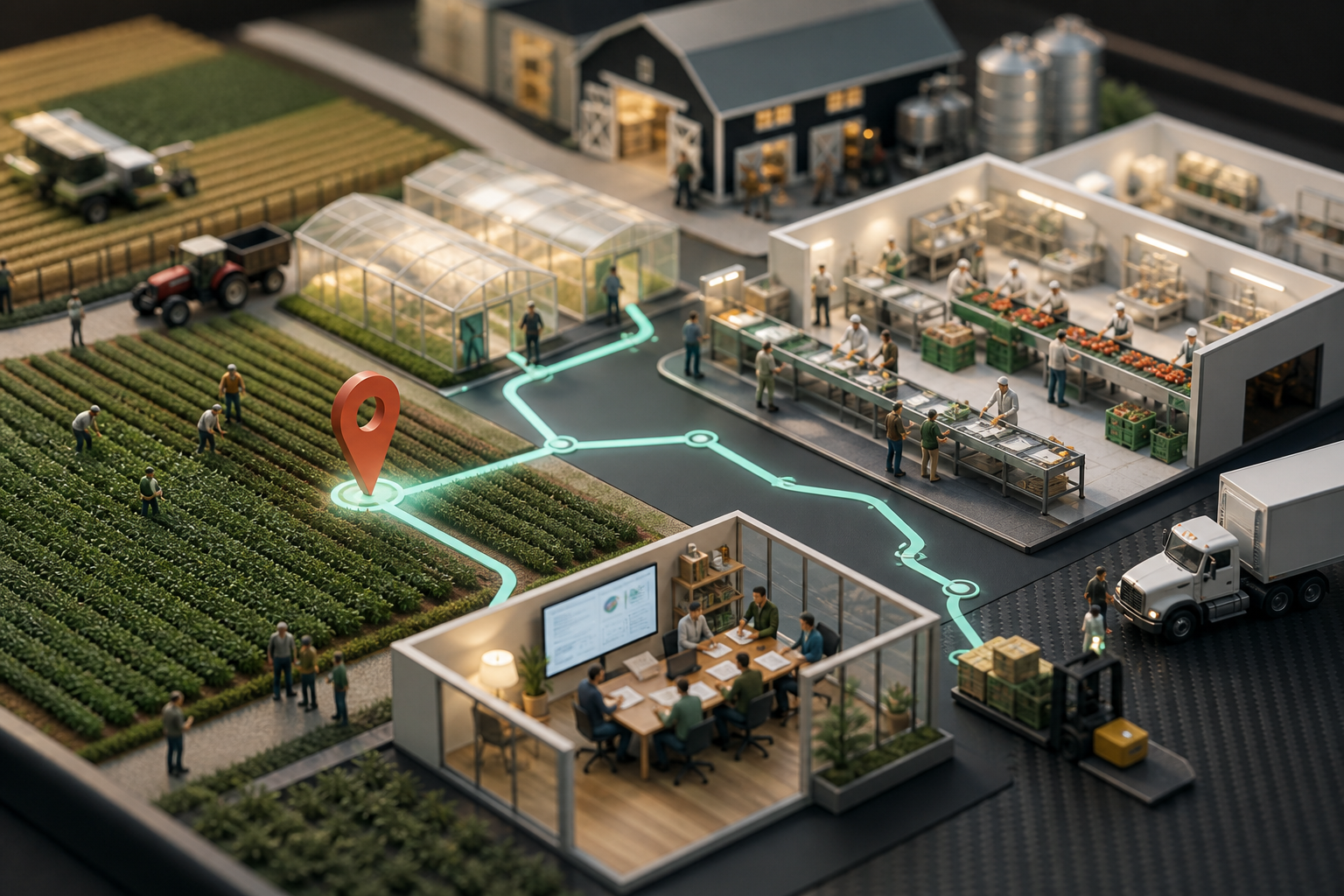
The industry reality
Agriculture and food production combine seasonal variability, biological systems, quality requirements and complex logistics. AI can support information access and planning, but agronomic, food-safety and operational decisions require validated data and qualified oversight.
Where pressure builds
These patterns shape where a focused AI use case can create practical value first.
Weather, crop, input and labour realities can shift priorities quickly.
Critical operating context lives in people, records, equipment and seasonal history.
Quality, production and movement records require dependable capture and review.
Inside the work
Technology earns its place when it makes real work clearer, calmer and more useful for the people doing it.
Weather, crop, input and labour realities can shift priorities quickly.

Critical operating context lives in people, records, equipment and seasonal history.
What we can build
Marketing, sales and operations opportunities are designed as one customer and team experience.
Explain products, capabilities, origin and proof in useful language.
Organize validated weather, production and resource inputs for human decisions.
Retrieve approved procedures, equipment guidance and seasonal records.
Structure inspection and traceability inputs for accountable review.
Connect readiness, inventory, pickup and delivery information.
Prepare consistent summaries from verified production and quality data.
From possibility to practice
Explain products, capabilities, origin and proof in useful language.

Structure inspection and traceability inputs for accountable review.
A sensible first use case
Choose one daily coordination summary for an agriculture or food production team. Agree which approved production, lot and shipment records it can use, the reporting cutoff and the reviewing owner. Test a missing lot reference, a corrected record and conflicting readiness information. Prepare a summary for review without changing traceability records or approving a release.
One focused implementationMap this opportunity↗Keep the right things human
✓Validated data and current operating sources
✓No autonomous food-safety or agronomic decisions
✓Qualified human approval for consequential actions
✓Clear ownership of traceability records
Questions worth asking
It can organize inputs and surface patterns, but qualified people should interpret conditions and own agronomic, quality and safety decisions.
It can improve capture, retrieval and summary when integrated with approved records. It must not invent or silently alter traceability data.
Yes, when focused on a frequent burden such as customer questions, procedure access, reporting or logistics coordination.
No. Show the missing reference and route it to the source owner. A plausible value would undermine the record; the summary should preserve what is known and what still needs verification.
No. It prepares information for the responsible team. Release decisions, quality checks and production instructions continue through the business’s approved process; a generated status label should not bypass it.
Related resources
Your context first
We’ll help identify a practical first use case, the boundaries that matter and what a useful result should prove.
Ottawa-based · Canada-wideSchedule an AI opportunity session↗