Integration, sales and administration
What Is a Knowledge Base?
A knowledge base is an organised collection of information intended to help people or systems answer questions. It may contain instructions, policies, product explanations and troubleshooting guides, with a way to find the relevant material.
Definition and further reading: Atlassian. Sources checked 7 November 2026.
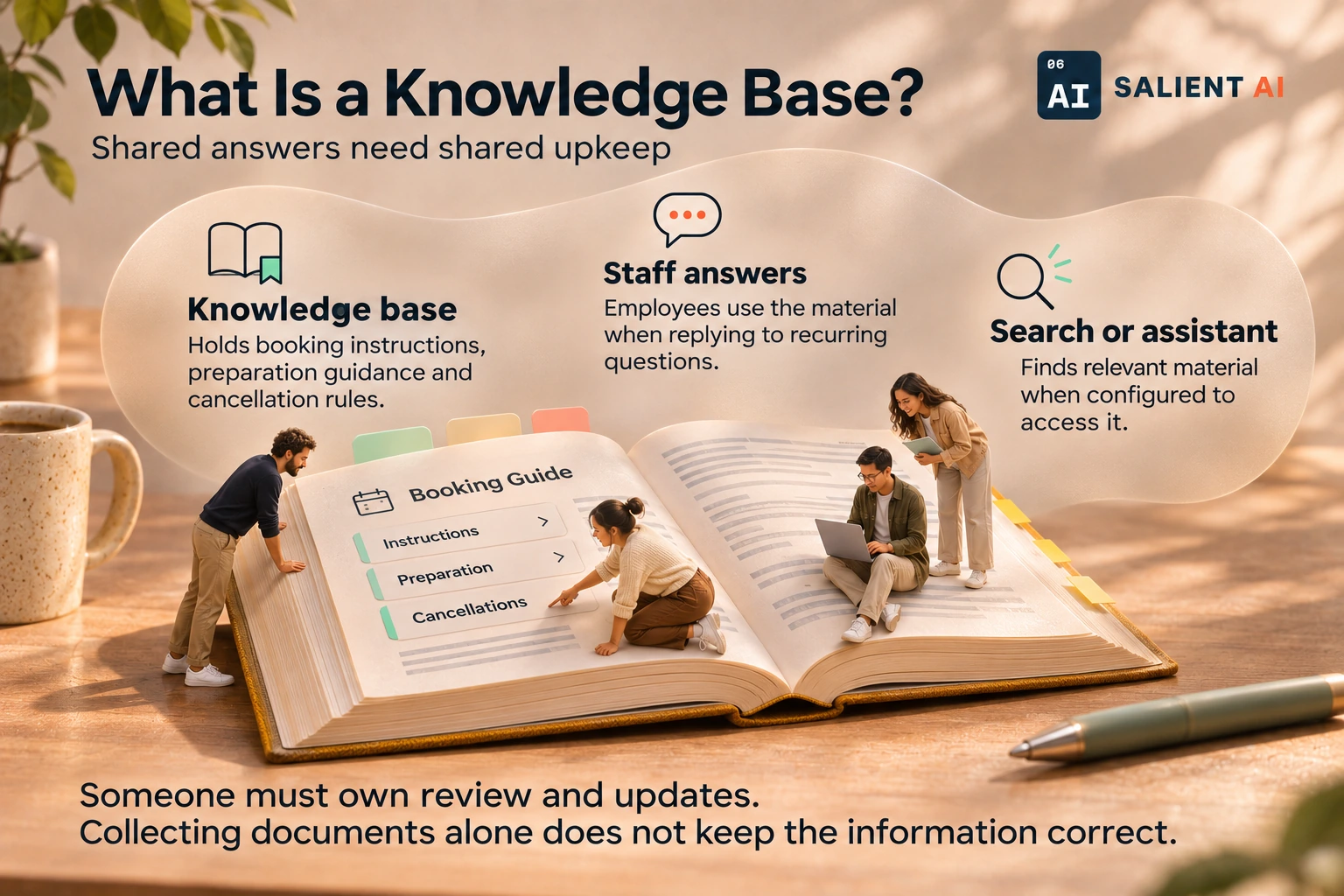
Shared answers need shared upkeep
A knowledge base provides organised material that people or connected systems can consult.
AI-generated illustration of a fictional business.
Read the infographic as text
A knowledge base provides organised material that people or connected systems can consult.
- Knowledge base: Holds booking instructions, preparation guidance and cancellation rules.
- Staff answers: Employees use the material when replying to recurring questions.
- Search or assistant: Finds relevant material when configured to access it.
Someone must own review and updates. Collecting documents alone does not keep the information correct.
Simplified explanation based on this entry’s sources and further reading.
Why would a knowledge base matter to a business?
It gives staff and customers a maintained place to look instead of relying on scattered messages or individual memory. An AI assistant can use suitable knowledge-base content when its connections and permissions allow.
A founder can use the knowledge base to make recurring answers easier to maintain as the team grows. Start with questions that create repeated interruptions or inconsistent replies. Assign an owner to the answer and make the approved version easy to find. That gives new staff a practical reference and gives experienced staff a clear place to correct changing information.
A practical knowledge base example
Illustrative example: a service company documents its booking process, preparation instructions and cancellation rules. Staff use the same approved material when answering recurring questions.
When the booking process changes, the responsible employee revises the approved guidance and checks the linked preparation instructions. A colleague tries to answer a common customer question using the revised material. This confirms that the knowledge base supports a real conversation rather than simply storing documents that nobody knows how to navigate.
A useful distinction about a knowledge base
A collection of files is not automatically a reliable knowledge base. Organisation, accuracy, ownership and access matter. Public customer guidance and confidential internal procedures may need separate access arrangements.
A shared folder can be an ingredient, but reliability depends on how people use and maintain its contents. Duplicate policies, unclear dates and missing owners make answers harder to trust. Evaluate the knowledge base by asking whether a staff member can find the applicable answer and identify whom to contact when that answer is incomplete.
A useful first question about a knowledge base
Who owns each important answer, and how will the team recognise and replace an outdated version?
Pick a recurring question and trace its answer to a named owner and current source. Decide what event should trigger a review, such as a service or policy change. This gives the team a manageable starting point for maintaining useful knowledge over time.
Sources and further reading
Want help applying this in your business?
Talk with Salient AI about your team’s needs and a practical next step.
Explore AI consulting for your business