
On November 22, Meta’s chief AI officer, Alexandr Wang, published a warning titled “Superintelligence is Arriving.” Mathematician Levent Alpöge had just described working with Claude on what he believes is a proof of the Riemann hypothesis, one of the hardest problems in mathematics. Wang sees that as a sign of how capable machines could become across many fields. He warned against simply handing over control of our future.
When tech leaders talk like this, it’s easy to get lost in buzzwords or start thinking about sci-fi movies where computers “wake up.”
To figure out what this means for everyday people, let’s break down the big words in plain English, look at what AI has in common with a biological virus, and answer the biggest question of all. If AI can do all this, what is our use as humans?
What Do These Big Words Actually Mean?
Superintelligence. Simply put, this is the idea of software that could outperform the smartest humans at almost everything, from coding and science to writing and planning.
Recursive self-improvement. Think of software that can help design a more capable version of itself. That version could then help build the next one. How far or how fast that process could go is an open question.
Being “alive.” As I wrote in an earlier Salient AI piece, Is AI Alive or Conscious?, a calculator does math faster than you, and a GPS can find a better route. Those abilities tell us little about whether something has feelings or knows it exists. Even if AI gets a thousand times smarter, its performance alone won’t tell us whether it has an inner life.
Think about a car engine versus a human body. A petrol engine needs fuel, spark and air working together to move. Your body relies on countless chemical reactions to stay alive. You can build an incredibly complicated machine. Complexity alone doesn’t make it alive.
What AI Has in Common With a Virus
When I say “virus” here, I mean a biological virus, like the flu. In biology, a virus sits in a strange grey area. It has genetic material, yet it depends on a living host cell’s machinery to make copies of itself.
On its own, an AI model does nothing. Without a computer and electricity, it’s just numbers sitting on a drive.
Inside a system, its reach can grow. Give that model access to networks and servers, and the same instructions can run on a much larger scale. How far they reach depends on the infrastructure and permissions we give it. An AI model can also run offline.
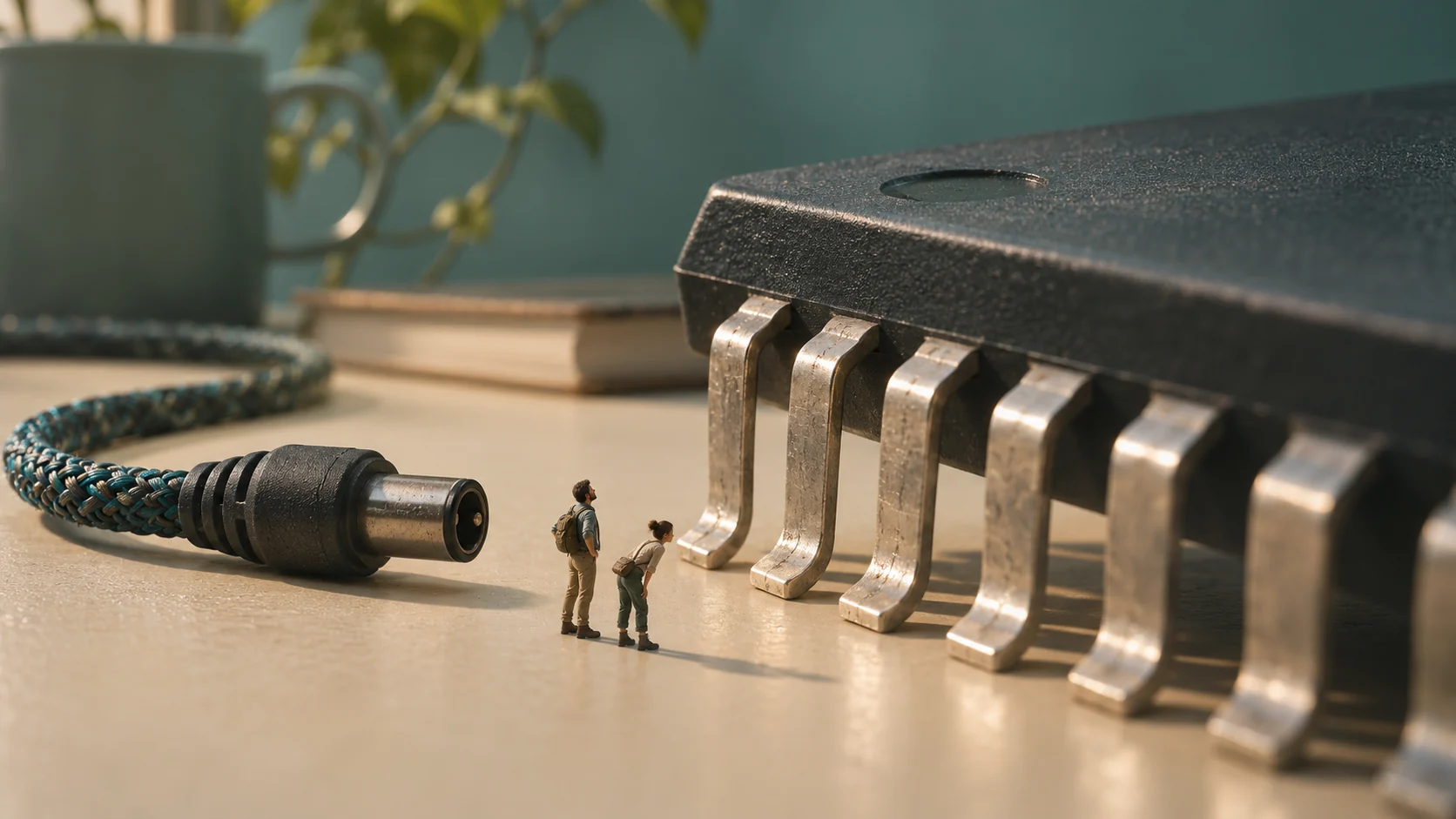
No feelings required. A flu virus doesn’t hate you when it makes you sick. In the same way, AI doesn’t need to become evil or “wake up” for its actions to have consequences.
What Is Our Use as Humans?
This brings us to the question that really matters. If AI can sift through enormous amounts of information and help solve hard problems, what are human beings actually good for?
It’s easy to debate whether superintelligence is a good thing or a bad thing, but one part is clear to me. Getting human beings away from repetitive tasks is a huge win. Across the world, people spend their lives doing the same routine work day after day. We were never meant to live like robots, repeating the same motions on a loop. If machines can take over that grind, it frees people up to think, build and live.
Of course, that only works if we don’t let AI make us mentally lazy. Too often we use it just to spit back information that already exists, treating it like the world’s fastest blender. If everyone uses the same AI to remix the same ideas, everything starts sounding the same, and we get out of the habit of thinking for ourselves.
Once machines handle more of the busywork, here’s what I think our job is.
- Knowing why something matters. AI can give you fifty ideas in two seconds. Which one is worth pursuing? We bring our experience, taste and intuition to that choice. We know what matters to us because we live with the outcome.
- Asking the right questions. A fast engine is useless if nobody is steering. AI can help find answers. We’re the ones who see a problem in our community or at work and decide it’s worth solving.
- Taking responsibility. Whether you’re running a local business, leading a team or raising a family, a real person has to own the final decision and stand behind it. That’s a core idea behind our Responsible AI approach.

Where Do We Go From Here?
Whatever the timetable for superintelligence, freeing people from repetitive, soul-crushing busywork is an opportunity we should welcome.
Wang used the phrase “lazy thinking” for the assumption that superintelligence is inevitable and the only question left is how to build it safely. I think there’s a version of that closer to home. We can get so caught up in what the machine can do that we forget to ask what we want it to do. I’d gladly hand over more of the repetitive grind. Our job is to bring the creativity, the heart and the leadership.