AI concepts
What Is Context Engineering?
Context engineering is the practice of selecting, organising and maintaining the information available to an AI model while it performs a task. That context can include instructions, retrieved documents, conversation history, tool results and working state. The aim is useful, relevant context within the system’s practical limits.
Definition and further reading: Anthropic. Sources checked 8 November 2026.
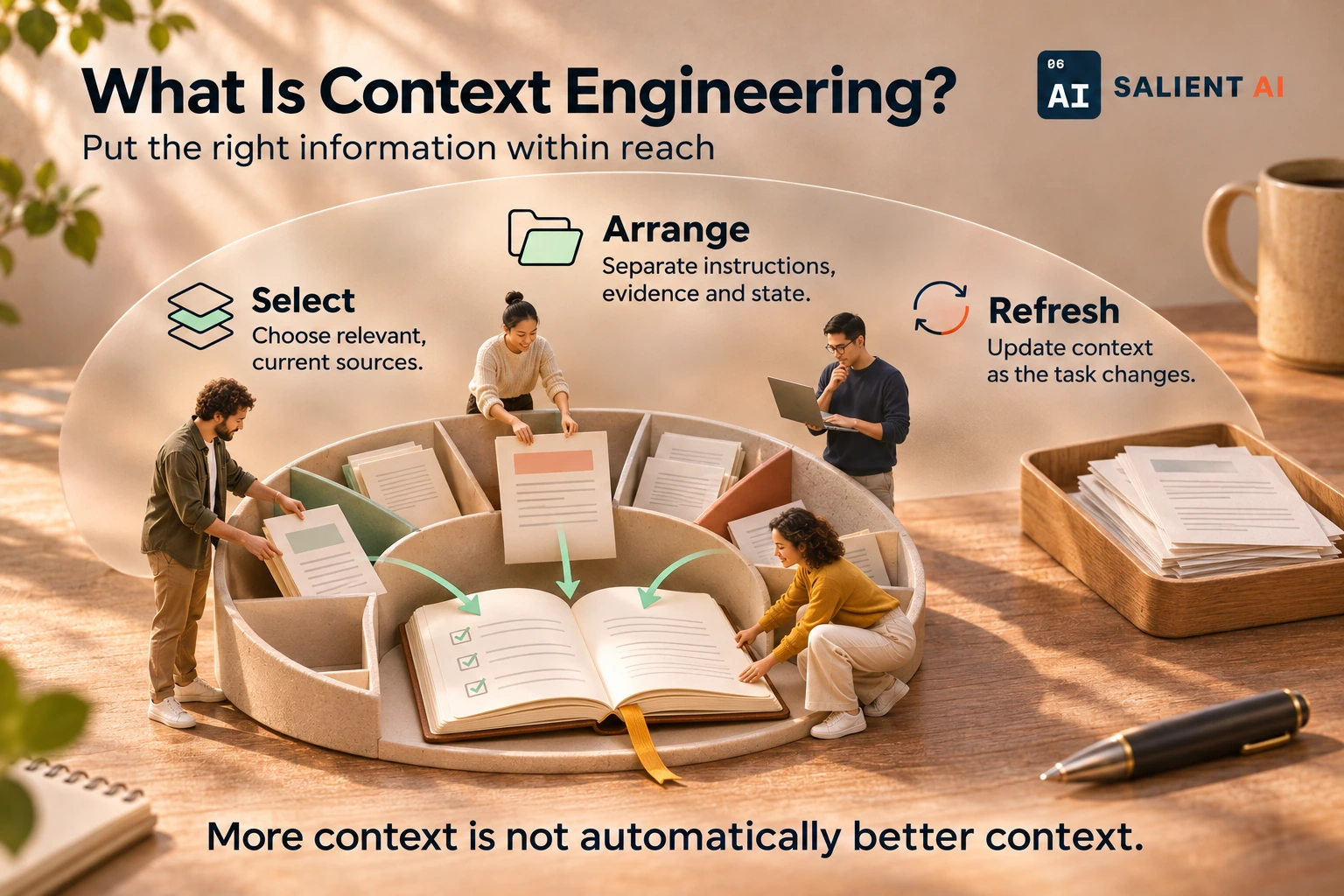
Put the right information within reach
Context engineering is the practice of selecting, organising and maintaining the information available to an AI model while it performs a task.
AI-generated illustration of a fictional business.
Read the infographic as text
Context engineering is the practice of selecting, organising and maintaining the information available to an AI model while it performs a task.
- Select: Choose relevant, current sources.
- Arrange: Separate instructions, evidence and state.
- Refresh: Update context as the task changes.
More context is not automatically better context.
Simplified explanation based on this entry’s sources and further reading.
Why would context engineering matter to a business?
An assistant can receive a well-written question and still struggle if its supporting material is incomplete, contradictory or stale. Context engineering addresses that surrounding information. For a business, the practical work includes deciding which documents are authoritative and how the assistant receives the details needed for the current task.
A founder does not need to begin with a complicated architecture. Start by tracing one answer back to the material that should support it. If the assistant cannot find the current policy or distinguish it from an old draft, improving the information flow may matter more than asking the same question in different ways.
A practical context engineering example
Illustrative example: a software company builds an internal onboarding assistant. Instead of supplying every company document at once, the team selects current setup guidance, the customer’s agreed service scope and the relevant support rules for each question. Unrelated sales drafts are kept out of that working context.
When an answer needs a fact that is unavailable, the assistant is expected to flag the gap. Staff test common questions and check the documents used to answer them. They also give the material an owner and review date, so a product change can trigger updates to the source and another check of affected answers.
A useful distinction about context engineering
The context window describes how much material a model can consider within a particular interaction; context engineering concerns what should occupy that space and how it gets there. A larger allowance does not automatically make a pile of conflicting documents easier to use well.
Prompt engineering focuses on crafting instructions and examples, while context engineering also considers retrieval, tool outputs and working history. For a business owner, the distinction is useful when diagnosing failures. A missing customer constraint calls for better information selection, whereas an unclear request may call for better task instructions. Both can affect the same result.
A useful first question about context engineering
What information would a capable employee need to answer this question accurately, and where does that information live? List the current sources, the person responsible for each and any access restrictions. Include the circumstances where the assistant should ask for clarification instead of filling a gap.
Walk through a representative task and inspect what actually reaches the model. Look for missing details, duplicated passages and outdated instructions that compete with current ones. Use those findings to simplify the information path before expanding the assistant to more topics, tools or departments within the business.
Sources and further reading
Put Context engineering to work in your business
Work through your own task or question with a human guide, using suitable business examples.
Explore AI coaching for business owners