Platforms and tools
What Is Claude Duet?
Claude Duet is Anthropic’s personal AI agent for handling tasks through connected apps. You describe the work in a message, and it uses a computer in the cloud to carry it out and bring back results or approval requests. It is offered as a research preview, with access restrictions that differ from ordinary Claude chat.
Definition and further reading: Anthropic, Anthropic. Sources checked 21 November 2026.
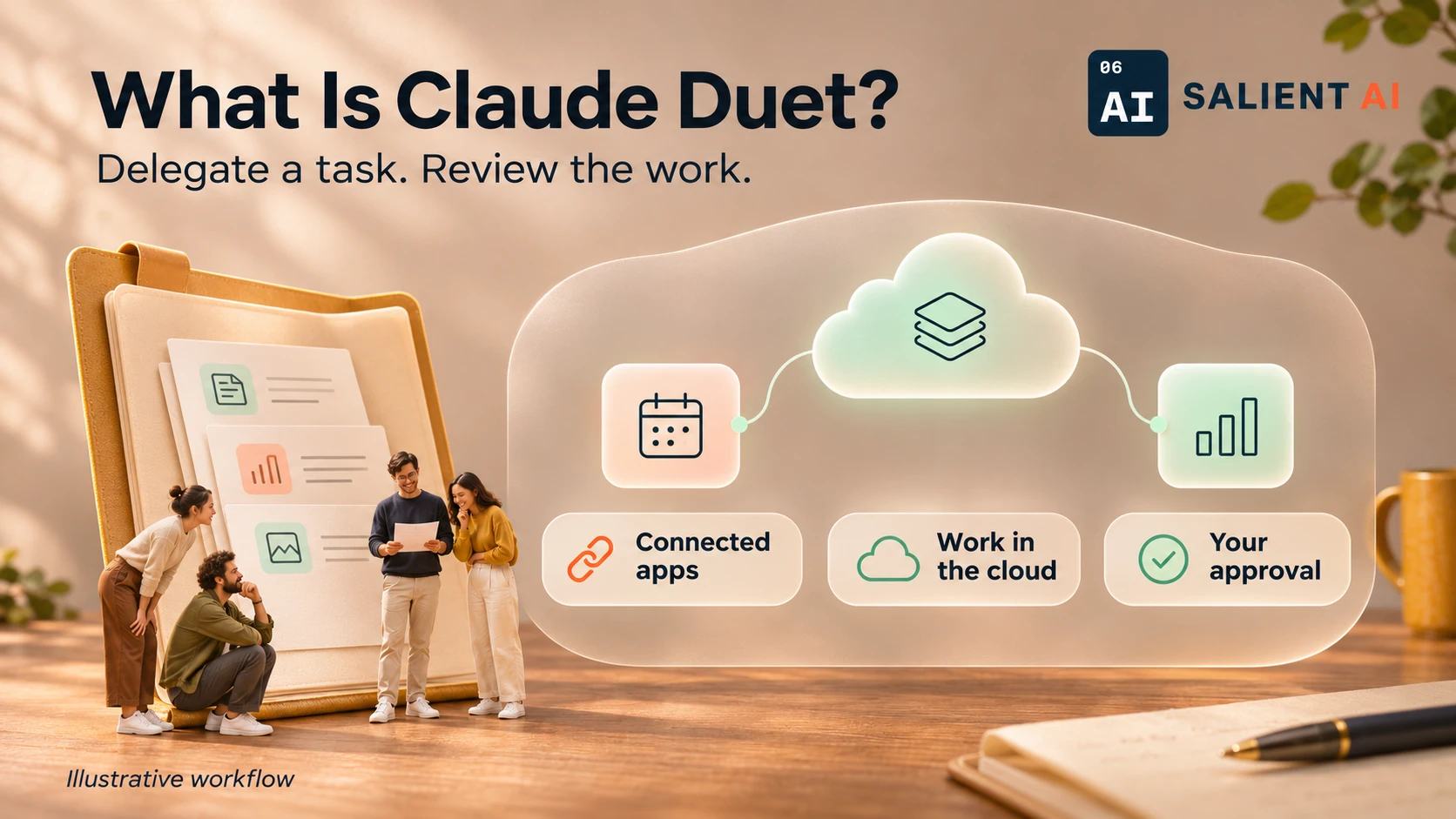
Delegate a task. Review the work.
Illustrative workflow.
AI-generated illustration of a fictional business.
Read the infographic as text
Illustrative workflow.
- Connected apps: Connect only the apps needed for the task.
- Work in the cloud: Claude Duet works on a computer in the cloud.
- Your approval: Review the work and proposed actions.
Check the sources and review proposed actions before making a commitment.
Simplified explanation based on this entry’s sources and further reading.
Why might a business owner use Claude Duet?
A busy owner often spends part of the morning gathering information before any useful decision can happen. Preparing for a meeting may involve finding the latest email, checking an appointment and looking up a document. An agent that can work across connected apps offers a way to delegate some of that preparation.
Choose a task whose result you can recognise and inspect. A meeting brief should say what the meeting is about, identify unanswered questions and point to the relevant material. Decide who checks it and how early it needs to arrive. These details make a trial easier to evaluate than a broad instruction to manage your day.
A practical Claude Duet example
Illustrative example: a founder asks Claude Duet to prepare a brief for an afternoon supplier meeting, using the accounts and documents they have connected. The request identifies the supplier, the meeting time and the questions the founder needs answered. It also asks for draft follow-up wording to review.
Before the meeting, the founder compares the proposed brief with the original messages. A delivery date in an old email has since changed, so they correct it. They keep the useful questions and approve any follow-up separately. This is an example of a review process, not a report of Salient testing the product or a promise that every connector supports the same task.
How is Claude Duet different from Claude chat?
Duet is designed to keep working in the cloud after you close the app. Anthropic says it is designed to seek approval before actions such as sending messages, making payments, signing documents or deleting material. That describes the intended behaviour; users still need to inspect requests and results.
As checked on 21 November 2026, Anthropic’s help page lists US access through invitations or a waitlist for Pro, Max and Ultra accounts, with Team and Enterprise unavailable. Canadian readers should check the current eligibility page before planning a rollout. An existing Claude subscription alone does not establish that Duet is available to you.
What should you decide before trying Claude Duet?
Write down which task you want to hand over and which information it actually needs. For a meeting brief, begin with approved source material and a named reviewer. Specify which actions need your decision, and make the deadline clear enough that you can still prepare manually if the result is late or incomplete.
After the trial, compare the time spent gathering information with the time spent checking and correcting it. Keep notes about missing context and mistaken assumptions. Those observations help you decide whether to repeat the task, narrow its scope or improve the instructions before connecting more business information.
Sources and further reading
Choose a useful first task
Discuss where a personal AI agent might help and how your team will check its work.
Explore AI consulting