Content and marketing
What Is Content Repurposing?
Content repurposing is adapting existing material into a different format, channel or use for a particular audience. It reuses the underlying knowledge while changing the presentation enough to suit the new context, rather than simply copying the same piece everywhere.
Definition and further reading: Mailchimp. Sources checked 8 November 2026.
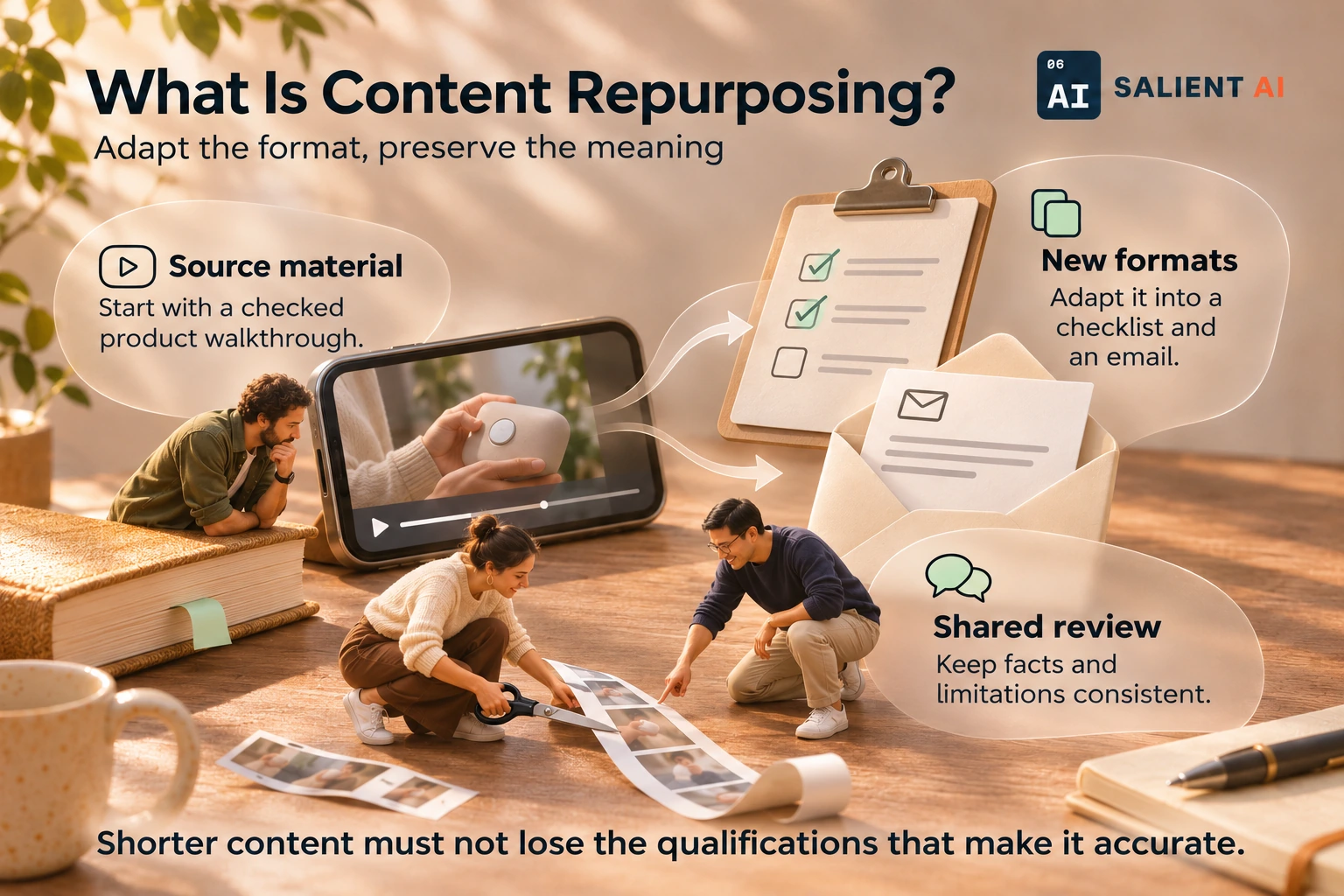
Adapt the format, preserve the meaning
Content repurposing is adapting existing material into a different format, channel or use for a particular audience.
AI-generated illustration of a fictional business.
Read the infographic as text
Content repurposing is adapting existing material into a different format, channel or use for a particular audience.
- Source material: Start with a checked product walkthrough.
- New formats: Adapt it into a checklist and an email.
- Shared review: Keep facts and limitations consistent.
Shorter content must not lose the qualifications that make it accurate.
Simplified explanation based on this entry’s sources and further reading.
Why would content repurposing matter to a business?
A useful customer explanation may support an article, a short demonstration and an email. Reuse can reduce repeated research, but each version still needs appropriate context, current facts and a reason for its audience to care.
For a small team, the best candidate is often an explanation that already answers a recurring question well. Consider how the audience’s situation changes between formats. An email may introduce the issue, while a detailed guide supports the actual task. Give each version a purpose and a route to the detail it cannot contain, rather than making shorter copies simply to fill more channels.
A practical content repurposing example
Illustrative example: a software founder records a walkthrough of a new onboarding process. The team turns the verified recording into a written checklist and a short email pointing customers to the full guide. They check the interface names and keep the setup limitations in every relevant version.
The checklist preserves the steps needed to complete setup, while the email focuses on who the change affects and where to find instructions. A reviewer compares both with the approved walkthrough. If the product changes later, the source record helps the team identify the dependent pieces that need updating instead of leaving conflicting versions in circulation.
A useful distinction about content repurposing
Repurposing changes how material is used. Republishing repeats substantially the same item. Summarising is one possible adaptation, but removing qualifications can change the meaning. AI can propose formats or drafts; staff still need to review the result against the source.
The useful question is whether the adapted piece preserves the meaning needed for its job. A short clip can omit background that an introductory email must explain, but neither should remove a limitation that changes the advice. Review the adaptation on its own as well as against the source, because its audience may never encounter the original material.
A useful first question about content repurposing
Which existing explanation is still accurate and valuable, and what would make it useful in this channel? Keep a link to the source and assign responsibility for updating all dependent versions.
Choose an existing item with a clear owner and reliable information. Describe the audience and purpose of each proposed format, then identify what must remain and where fuller detail will live. That gives repurposing an editorial reason beyond producing more output from the same source.
Sources and further reading
Want help applying this in your business?
Connect content and delivery around your business priorities with an agreed scope and responsibilities.
Explore outsourced marketing services