Websites and development
What Is HTTPS?
HTTPS is the protected version of HTTP, the protocol used to exchange website information. It uses TLS to encrypt communication between a browser and a server and support verification of the server's identity.
Definition and further reading: MDN. Sources checked 7 November 2026.
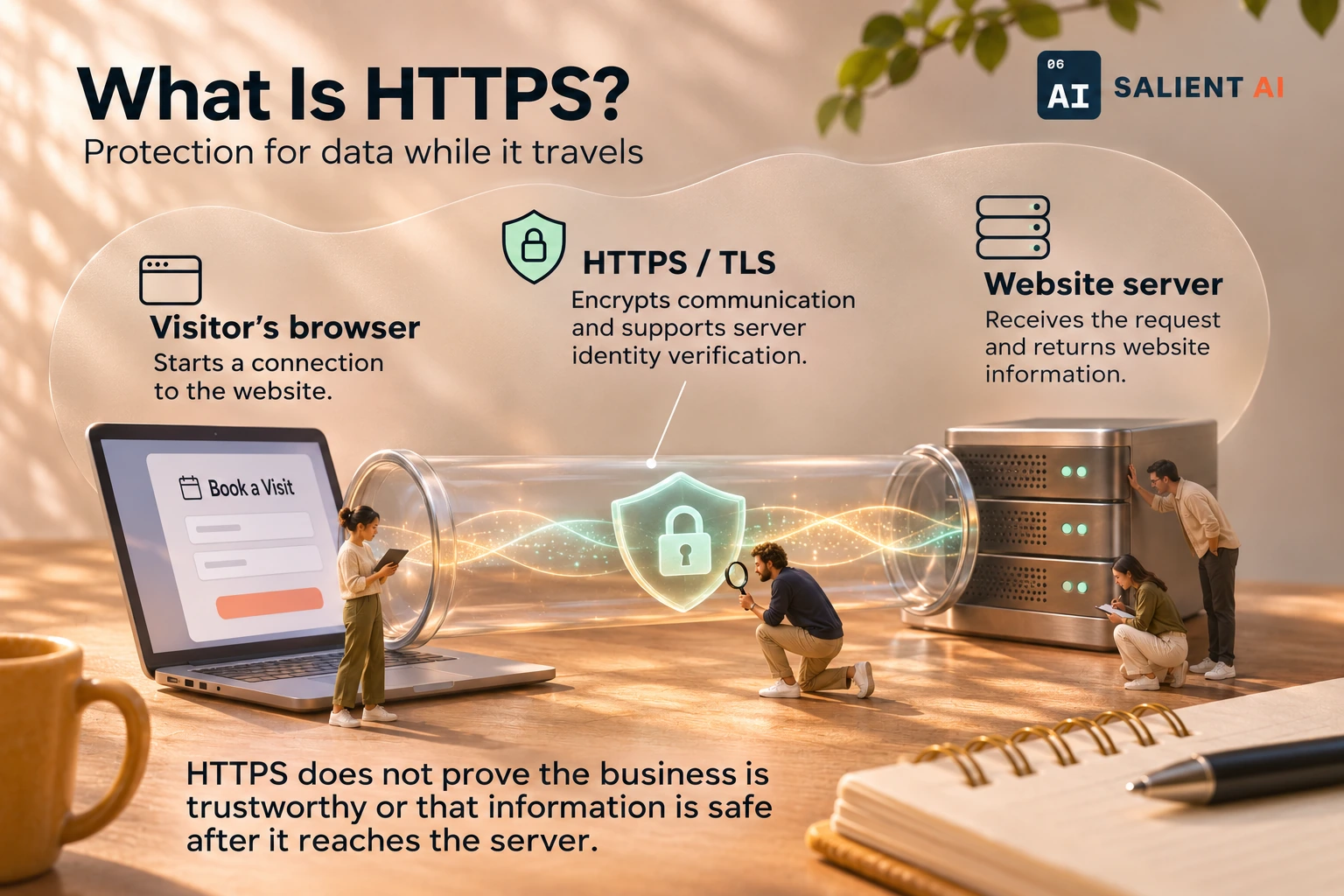
Protection for data while it travels
HTTPS uses TLS for the connection between the browser and server.
AI-generated illustration of a fictional business.
Read the infographic as text
HTTPS uses TLS for the connection between the browser and server.
- Visitor’s browser: Starts a connection to the website.
- HTTPS / TLS: Encrypts communication and supports server identity verification.
- Website server: Receives the request and returns website information.
HTTPS does not prove the business is trustworthy or that information is safe after it reaches the server.
Simplified explanation based on this entry’s sources and further reading.
Why would HTTPS matter to a business?
Visitors should be able to browse pages and send enquiries over a properly configured connection. Certificate problems or insecure resources can interrupt that experience and deserve attention during launch checks.
For a small business, an interrupted enquiry can be difficult to notice: the visitor may simply leave. Include connection checks in ordinary website maintenance, especially after an address or hosting change. The owner should know who can investigate a warning and how to confirm that the customer’s full journey, including the submission step, is working again.
A practical HTTPS example
Illustrative example: before launching a booking website, a team checks the HTTPS address, the certificate and the form submission. It also checks that visitors using the older HTTP address reach the intended secure page.
A colleague follows a link from an older email and completes a clearly labelled test booking. The team checks that the address remains as expected and that the booking reaches its destination. This tests the route customers may actually use, rather than checking only the homepage address typed directly into a browser.
A useful distinction about HTTPS
HTTPS protects the connection. It does not establish that a business is trustworthy, that its claims are accurate or that information stored after submission is properly protected.
The connection and the business process need separate attention. A visitor may submit through HTTPS while staff still handle the resulting information poorly or publish misleading claims on the page. Assess the connection as one part of a wider system that also needs accurate content, appropriate access and a sensible process for using customer information.
A useful first question about HTTPS
Who is responsible for certificate renewal and for checking that the entire enquiry journey continues to work securely?
Name the person who receives alerts and the person who can fix a problem. Agree which important pages and submission paths they should check after a renewal or configuration change. Responsibility is clearer when it includes both the technical task and the customer-facing result.
Sources and further reading
Want help applying this in your business?
Talk with Salient AI about your team’s needs and a practical next step.
Discuss your goals with Salient AI